Saturday, June 13, 2009

What Lies Ahead?


What will they think 200 years from now when they dig up the remains of our civilization?
Let’s pretend that something happens and our lives that we know it are destroyed. Buildings and structures are in ruins from what used to be a living and thriving society. All that remains are the crumbling walls of homes and businesses and paths that once were roads which connected us with people from other cities.
Vines from unattended trees lace themselves around everything, reclaiming what had once been owned by the forest before men of our civilization came through with boats and other forms of transportation clearing the way for others from across the seas to settle the mostly untamed land. Perhaps they will find bleached bones from some great tragedy laying about the ground. Will they be able to find and dig up the 200th birthday vaults buried in 1976 for the benefit of whoever the citizens of our area would be after another 200 years?
If so, what will they think about our civilization in the mid 1970s of the 20th Century? Will the pictures and letters which were buried for posterity in so many towns and cities across the great nation that was known as the United States of America tell the new discoverers much or little about the land?
If we had it all to do again, would we choose more wisely in the chosen buried treasures? At that time in American history, there was a relative peace in the land. An American President, Richard Nixon had been forced from office because of threat of impeachment. An appointed Vice-president, Gerald Ford from Michigan would be defeated in his only attempt at being elected to the top office in the land. His defeat would come at the hands of a peanut farmer from central Georgia who ran on a campaign that was based on the fact that he would never lie to the people of this nation.
Former Governor Jimmy Carter of tiny Plains, Georgia would last only one term. His defeat would be at the hands of a former movie star—some people said he was not that good an actor—named Ronald Reagan. He would go on to serve two terms as President and gain a place in history as one of the greatest Presidents of all time. Many credited him with bringing down the threat of communism and the break-up of the once mighty and feared Soviet Union.
Will they know of a fateful day in September, 2001 when a new war came to the great country, and what will be the outcome of the sudden menace of world-wide terrorism by religious fanatics who choose to blow themselves up while killing others? Will they be able to learn from the ruins of a once-great civilization, going forward to bring about a new way of life?
Will the people who come to this land come from another world, unknown by the former civilization, but suspected by many to exist, or will they be from some former remote portion of the land known as Earth?
Just wondering?

Wednesday, June 10, 2009

Enjoy Your Money


By J. Steve Miller


Out of the blue one evening, I received the following e-mail from someone named Steve Miller, an author who according to him, has Hawkinsville connections.
Those two things immediately caught my attention—he being an author and having Hawkinsville connections—therefore I began reading with more rapt attention. His e-mail, in part went as follows:
Dear Sam,
Thanks for your articles in the Hawkinsville Dispatch & News! My mom takes the paper and we enjoy keeping up with Hawkinsville news.
My mom, Ann Owen Miller, grew up on Martin Street in Hawkinsville, the daughter of Ed and Pauline "Polly" Owen and sister of my uncle Ed, Junior. All of them influenced my views of personal money management, informing the ideas presented in my recent book. They were all hard workers, frugal, and seemed to understand finances in ways that the younger generations don't seem to get. That's why I mention Polly in my introduction and other relatives in my acknowledgements.
The book is Enjoy Your Money! How to Make It, Save It, Invest It and Give It, published by Wisdom Creek Press. It came off the press last month. Although well-researched and documented, I wrote it as a story to capture people who hate financial books. I thought it might be of interest to readers, especially because of my Hawkinsville connections. Perhaps, I could arrange a signing or to speak in a school or to a youth group? It might be a way to help young people (ages 16-30) get a hold of their finances. Even if I just got a mention in the paper, it would mean a lot.
To see a bit more about the book, including an overview and blurbs, check it out.
Chris Stanley of Kingston, PA wrote the following review: “This book provided me with an amazing insight into many different areas of personal finance.


The author covers every topic from saving and investing money to making and enjoying money; and better yet, the book is written in an exciting and fun to read format that won't bore you or become a chore to read. I've read...eh tried to read...many other personal finance books, and I'm sure a lot of them had very good information in them; however, they were not engaging enough to get through, and so I wasn't able to gleam most of that good information. This book was different though. With each page I found myself more and more engaged, and before I knew it I had read the whole book, taking a wealth of financial knowledge with me. I would highly recommend this book to anyone, regardless of how much you may or may not know about personal finance. Everyone could take something away from this book. I especially recommend this book to anyone in high school or college, because when it comes to learning about finances, the sooner the better. I personally read the book as a college student, and while other personal finance books for me can sometimes make the concepts of personal finance complicated to understand, the author of this book made the world of personal finance very easy to understand on my level. This is why I think this book would be especially great for any teen or young adult out there trying to get a head start on their financial future.”
By the way, Polly is doing great at age 103! I help mom care for her next door, here in Acworth. We had to move her up here a couple of years ago after both she and dad had strokes.
Sincerely,
Steve Miller

In his introduction, Steve talks about his grandmother who began investing her money in her sixties—now 103 years-old—and she has accumulated a small fortune.
J. Steve Miller, educator, investor, entrepreneur, and speaker has taught audiences from Atlanta to Moscow. He’s known for drawing practical wisdom from serious research and communicating it in accessible, unforgettable ways. Steve is the founder and president of Legacy Educational Resources, providing global resources for teachers of life skills in public schools, churches, and service organizations at http://www.character-education.info/ on the Internet. A self-styled “wisdom broker,” Steve collects wisdom from many fields and packages it for teachers and writers via his published books and the Web. His wife, Cherie, and their seven sons continually remind him what works and what doesn’t. In a question and answer session, Miller did not hold back on his inspirations.Q: Steve, what motivated you to write this book?A: First, people are hurting with their finances. According to recent surveys: Twenty-five percent of American adults live paycheck to paycheck. They fear going under and desperately need to accumulate wealth. Ninety-eight percent of middle-aged people reported regret at how they spent their money in the light of how much they could have saved. Today's college students graduate with, on average, over $22,000 in debt. Their first job out of college doesn't pay what they expected. They want to get out of debt and accumulate enough wealth to purchase a house.
Personal debt is reaching record highs as personal savings reach all time lows (under zero percent average savings in 2006). How will people ever get ahead? B: Second, to get more personal, Cherie and I are raising seven boys, from 14-year-old twins to a 27-year-old. I don't want them to live their lives experiencing the misery of financial bondage.In his preface, Miller states, “This book will help you to get out of debt and accumulate wealth. It will help you to get ahead, even when the work you love doesn’t produce “big bucks.”You will find your strengths and passions and make a living with them. You will live a more fulfilled life. The cast of characters which Miller uses to get his story across are four young people, Antonio, Akashi, James and Amy, and through them and their mentors, he is able to show how money management can be exciting! “It’s fun to see your money grow,” Miller says. “It’s fun to feel successful, and it’s fun to have enough money to help others.


To this end, I hope you have fun reading my book.”During the Great Red Devil Reunion of 2003, I enjoyed communicating with many of the former students who were educated at Hawkinsville High School. Steve Miller’s mother, Ann Owen Miller, was one such individual. The acorn doesn’t fall far from the tree. In researching the Senior Annual Hawk-eye, it revealed that Ann Owen was a member of the annual staff and more importantly, she was a member of the Beta Club, the smartest of the smart.You may contact Steve Miller concerning this well-intentioned and thought-provoking book at his e-mail address smillero@mindspring.com.

I Love Alpacas.com


In my other life as a traveling salesman, my best friend was always Talk Radio. Sometimes it would be the controversial Neal Boortz who got his start in Talk Radio over thirty years ago on a small station called WRNG Radio. The catch phrase was “Ring Radio.” Sometimes, he stirred my blood with his rudeness, but today he is wealthy with syndication all over the U.S.
Does the name Rush mean anything to you? In 1988, Limbaugh took his program national to set the standard.
My favorite Talk Radio personality in those days was one called Ludlow Porch, one of the all-time trivia masters, and champion of old people who enjoyed making up names for themselves when they called in to his program. Some of the ones that stand out in my memory after all these years are Jim Clip, Miss Kitty, M. T. Head and Homer Southwell, to name a few. Always introducing outrageous and funny subjects, Ludlow could bring up topics like the Sunday “funnies” to bring back wonderful memories. Some of you will remember them. Smilin’ Jack, Buzz Sawyer, Henry, Little Lulu, Dick Tracy, and on and on. What memories!
Once Ludlow had a guest on one of his radio programs who was extremely controversial. The topic was one about raising Naugas for a profit by selling their hides. Incensed, people became caught up in calling about the hides of naugas being sold because of the implication of cruelty to the poor little animals. The guest tried to assure the listeners that it was really not cruel, because the little naugas, once skinned, would grow back their hide to live another day. The beauty of raising naugas was the variety of colors they came in—green, orange, blue, red, and even black and white checked. The hide was especially popular in cheap funrniture, and unless torn, it proved to be very durable. If it got torn or cut accidentally, patching it with duct tape was a cinch. Some people became infuriated with the idea of raising the little slick-skinned animals purely for the purpose of using their hide for sofas and inexpensive recliners.
I think back on that day while listening to the topic of raising naugas for their hides, and I still think it might have been a spoof; Ludlow playing with some of our minds.
I have never actually seen a nauga, which brings me to the topic of a television commercial, which I have been seeing a lot of lately.
I love alpaccas.com seems to me to be another spoof. “I just love my alpaccas,” the woman says. “They are so sweet and loving.” Now look, I can spot a spoof a mile away. They have taken the magic of television and spliced a camel head to the body of a shetland pony, added a lot of fur to him with some glue and presto! An alpacca. Doubtful? Go back and view a Star Wars movie and look at some of the furry critters in it. Can you say “Chewbacca?”

Monday, May 4, 2009

Laughing with the Legends

We were amongst the few people who attended the last show of the season at the Old Opera House in Hawkinsville a week ago. Of all the great performances this past year, this one had to be near the top with all around good fun, especially for those of us who lived through that period.
Oh sure! Most of us men are crowned with gray hair or none at all, but we still feel the rhythm, and the women for the most part are still beautiful in a wonderful, mature way. Sometimes I wonder who coined that phrase, “The Fabulous Fifties.” As most of us remember those days, we smile at those treasured memories—sometimes we even joke about them now. Ahh! We were so young!
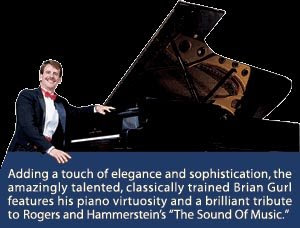
A man and his wife—entertainers for sure—put on quite a show on that old historic stage that night. With the unlikely last name of Gurl, his Brian and hers Joey, they sang, danced, did comedy sketches, and, boy oh boy, did he play the piano! He began with a medley of 1950s songs, beginning with some from the “Sound of Music” and going all the way to Little Richard with some of his “Tuti Fruiti” and “Long Tall Sally” which showed us right away his diversity with the piano.
His wife, Joey came on stage and did a great old Lucy rendition of advertisement of a vitamin type drink loaded with 25% alcohol and wound up with a side-splitting skit for those of us in the audience. The two of them teamed up to show us their version of The Hit Parade with Joey in a big box representing Old Gold Cigarettes. Afterwards, Brian hit the stage again with a special on Elvis, while Joey played the role of an awe-struck teeny bopper.
There was a smattering of kids in the audience, but by and large it was the over the hill group who laughed the longest and the loudest at ourselves as they performed what much of the world viewed us as in the 1950s.
In the second act after a short intermission for them to catch their breath, and why wouldn’t they need to do that? After all, they were imitating us, a very energetic bunch in those days.
Perhaps, Brian Gurl’s most enthusiastic act was when he began as Liberace with his famous suits and a candelabra for the piano. By the time he was through with the “smiley one,” he literally flew into a Jerry Lee Lewis aka “The Killer” playing the piano from head to toe, frontwards to backwards, fingers and feet, all flying across the keyboard. That act reminded me so much of one day in our World History class when the teacher was late getting to the room. Most of the boys and some of the girls literally forced Billy (last name withheld to protect the innocent) to play his lively rendition of “Lady of Spain” on the upright antique piano. When she came in, everyone else was quiet and he was playing hard. The teacher grabbed him by the nap of the neck and practically flung him in the direction of his desk.
Tell me the fifties weren’t fabulous!

Saturday, May 2, 2009

A Young Boy’s Summer


Granted it has been a few decades since I was in school, but in those days, school began the beginning of September and closed for the summer as May came to an end. June, July, and August were created for the children to enjoy. When the last bell rang at the end of May, shoes and shirts were suddenly tossed aside, and other than Sunday School and Church during the summer, our small bodies were not encumbered with them.
The asphalt roads were hot and rough, which helped to toughen the soles of our feet to the point that it was difficult for glass, nails or sand spurs to penetrate them. Shirts came off resulting in tans, hair became involuntarily sun-bleached, and our feet enjoyed the experience that one can only get from toes feeling the sand and soil pushing upward between them.
Creeks were fair game for swimming and fishing. Pick-up baseball games happened as quickly as someone suggested, "Let’s play some ball!" Baseball covers had been knocked off, but still served us well, as long as the string did not unravel. Bats that had been broken were repaired with a hammer, a few nails, and reinforced with some tape. Watermelons, cantaloupes, and peaches seemed to be in abundance for our enjoyment. Home-made ice cream sometimes was hand-churned on Sunday afternoon.
June Bugs, a beautiful metallic green insect about the size of a thumb were fair game for a toy. They were slow moving critters when they landed and fairly easy to catch. One only needed some thread from Mother’s sewing machine to attach to one leg of the bug, and then presto, he would provide plenty of entertainment by flying round and round. After we tired of this toy, we loosened the string and returned him to his life of flying in freedom.
Home-made kites were lots of fun when the wind provided enough impetus to keep it aloft. I close my eyes now, and I can still see the message (piece of paper with a hole in the center) working its way upward toward the kite. Tails strung downward from the kites several feet long in a variety of colors knotted together in strips of 6 to 12 inches each. Lightweight sticks, newspaper from the Macon News, and a small amount of glue made wonderful kites. Rolls of string could be found in the trash at the cotton mill.
Seems strange now that we never used to ask what the temperature was. Our biggest concern seemed to be, not how hot the weather would be, but rather whether we could find some tadpoles in a ditch where some rainwater had been trapped. Occasionally the men from the city water department came out to test the fire hydrants, and that was an open invitation to enjoy an impromptu treat as the water pored from the hydrant in a great stream.
Sometimes in the early evening, "lightning bugs", (some people refer to them as fireflies) darted through the air teasing a young boy with its tail section going on and off. The thrill was in capturing the little creature, and placing him in a small jar, enjoying the up close observation of the mysterious changing dark to light phenomenon. Decades later, I find myself still intrigued with them. However I no longer try to catch them, rather I enjoy watching them from a distance.
Nights were some of the most wonderful times of my youth as we gathered under the street light that hung in front of our house as the cry went out loud and clear, "Let’s play hide and seek!" Shrieks of delight came from all the boys and girls who enjoyed the wonderful experience of playing under that old light.


Anyone who has ever sought directions in Marietta, Georgia, a city north of Atlanta, has been treated to the following: "Well, just go to the Big Chicken and turn right and go three miles, or go to the Big Chicken and look for highway 41. Follow it for six blocks and turn left."
The common denominator is always the Big Chicken, a giant sign that protrudes upward approximately 100 feet. The crown at the top is a caricature likeness of a chicken—eyes rolling and beak opening and closing—seemingly overlooking all the traffic below. Inside is a name brand fried chicken fast-food restaurant created and made popular by a man in a white suit, black string bow tie dressed immaculately. The man with a colonel in front of his name sported a gray goatee beard to match his gray hair.
According to legend, at first the colonel protested the original monstrosity of a big chicken, however he finally relented and allowed it. To the folks of Marietta, it was soon adopted as a landmark, finally becoming the central figure of direction-giving, as mentioned above. As time and pigeons took its toll on the original sign—also very large—people began to seek the prevention of the structure, or a new one going back up. There was quite a battle between the ayes and the nays, causing not a few politicians to become involved. Bottom line was a replacement big chicken was constructed and stands today as a beacon for directions to find anything in that fair city.
At least twenty years ago, several of my adult-like children prodded me into going to Six-Flags Over Georgia, a mammoth recreation facility that covers several acres. To find the location of the complex, simply go to the Big Chicken in Marietta and turn south towards I-75. Follow that to I-285 West, connecting with I-20 West. Several miles later the Six-Flags exit will dominate the road signs directing you to the giant playground.
Upon our arrival, we walked around, ate cotton candy or funnel cakes looking for the rides which we wanted to enjoy. Ever since I was a child, rides that go around in circles, such as Merry-go-Rounds or flying airplanes make me deathly ill—something akin to dizziness brought on by traveling in circles. I stay away from them, choosing to watch from the sidelines. I can tolerate the Ferris Wheel, assuming they don’t get carried away with stopping it on top for very long.
Suffice it to say that I tremble in fear when I look at a Roller Coaster. They just don’t look safe. Then these people who claim to love their daddy spotted a ride called the Big Drop or something close to that. "C’mon Dad," they insisted, "this will be a hoot, and it doesn’t go around in circles."
For some unknown reason, I allowed myself to be talked into this inane ride. It chugged upward slowly, grunting and straining, creaking and growling. I could see the Parachute Drop nearby and I had thoughts of maybe trying it out afterwards. Our cage surrounded us, a steel bar kept us in place as it progressed slowly outward, and then it happened! Faster than the speed of a bullet we dropped straight down—faster than any drop I have ever experienced—toward the ground. I knew I was dead before I hit the ground. My stomach was a few seconds behind me.
Once the machine stopped, and I crawled to safety, I realized I was the real Big Chicken!

Front Porches 1940 Circa


My brother, Billy, prompted my memory about our porches when we were boys. This Cotton Patch column is a compilation of both of our memories of just what role porches played in our youth.
Porches are has-beens, written about by many, but not carried forth into our lives today, but even more so wherein our children and grandchildren are concerned. Porches played such a huge role in our lives and I am proud to say that we have a front porch today, because we bought an old house over a hundred years old in 1972. If we had built a house in 1972, it probably would have had a front stoop on it, not to be confused with a front porch.
Porches were a mainstay in people’s lives.
“I remember Daddy and Mister Bob Lee sitting on the metal glider chairs on the front porch where they visited,” Billy said. Our mother painted the chairs frequently to keep the appearance of them good.
“Front porches,” Billy said, “were a nice place for people to sit and enjoy a cold glass of iced tea or lemonade. Furthermore, Mother shelled peas or butter beans, or shucked fresh corn.”
It was cool enough to enjoy, because Mother hung strings from the edge of the roof to the floor of the porch and completed the home made shade-maker by attaching kudzu to the bottom. As you can imagine, it didn’t take long before it was closed in from the afternoon setting of the sun.
The front porch was the spot where the Macon News landed; we enjoyed lying on our stomachs while reading the comics and sports page.
People walked by casually waving or speaking. Some even came up to set a spell.
“I remember people coming up on our porch at night,” Billy said, “knocking on the door; some were tipsy from strong drink, while others were lost or looking for directions.”
We both have painful memories of the po-leece shooting two of our dogs which we had tied underneath the front porch. One of our homes had two front doors coming out to the porch. One door was numbered 202 and the other was numbered 204. Really! I couldn’t make that up.
Oh, the memories flood our minds thinking of that front porch which was bombarded on Valentine night with hearts and rocks—the rocks made the noise to alert us that the Valentines had arrived.
Mother would feed hobos from the edge of the front porch when they came looking for a hand out.
Some people extended their front porch out under the old oak tree where stories were shared and laughter enjoyed.
In those days, the front porch and the back porch had totally different functions—the front being for visiting as noted above—and the back porch was for work. On the back porch was a wringer washing machine including accessory tubs for rinsing. In the yard was a clothes line for drying the clothes by wind and sunlight.
On the back porch at Grandma's house, she had a shallow well where we drew water for our showers, one standing beneath a shelf while the other brother tilted the five gallon jug on its side for a very cold shower.
Brrr! The glory days of porches!